

Dhaka must carefully consider consequences before joining Makkah Pact: Retired Ambassador Humayun Kabir
Staff Correspondent
Former Ambassador M. Humayun Kabir on Friday said Bangladesh’s decision on whether to join the Makkah Pact in future should be taken after deep consideration, not out of emotion, as Pakistan, Saudi Arabia and Türkiye signed the agreement solely for the sake of their respective security interests.
He said there does not seem to be a framework in the Makkah Pact that can unite the Muslim world. It is uncertain how far the agreement will protect the interests of the Muslim world.
Whether Bangladesh will join the Makkah Pact in future is a difficult decision that must be taken through deep thought rather than emotion, said the former ambassador.
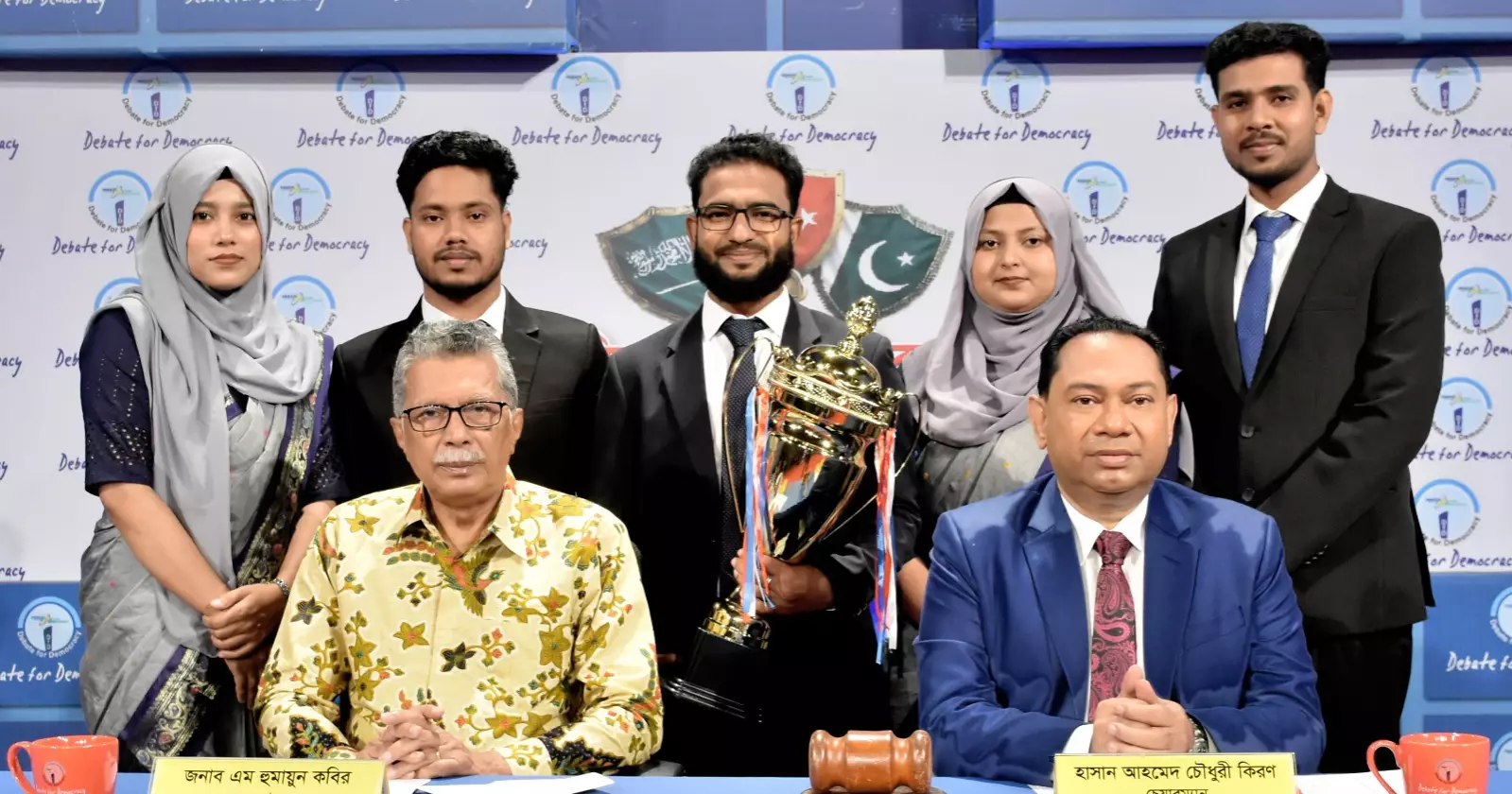
M. Humayun Kabir made the remarks while addressing a shadow parliament debate on the Makkah Pact and its role in resolving the crises facing the Muslim world at the Bangladesh Film Development Corporation (BFDC) in the city.
The former ambassador said the question of whether Bangladesh should send troops to Saudi Arabia also requires careful analysis. If necessary, Bangladesh could send troops to Saudi Arabia through a bilateral arrangement without joining the Makkah Pact, he said.
He warned that if the ongoing conflict prolongs in the Middle East, including Saudi Arabia, it could adversely affect Bangladesh’s labour market and remittance inflows.
If Bangladesh joins the Makkah Pact, India, Israel and the UAE could form another axis, potentially disrupting security, stability and the economic environment in South Asia, he added.
Humayun Kabir said the Middle East crisis had reached a complex stage, with the recent conflict between Saudi Arabia and the Houthis further complicating the situation.
He said the conflict could be resolved through compensation to the Houthis and mutual respect between the parties.
The event was chaired by Debate for Democracy Chairman Hassan Ahamed Chowdhury Kiron.
Hassan Ahamed Chowdhury Kiron said the Muslim world was currently going through a severe crisis, with Muslims facing persecution, displacement and deprivation of their rights in different parts of the world, including Palestine, Kashmir and Myanmar's Rakhine State.
Internal divisions, Shia-Sunni conflicts, political instability and the tendency of anti-Islamic forces to brand Muslims as terrorists were making the Muslim world increasingly vulnerable, he said.
He observed that organisations such as the Organisation of Islamic Cooperation (OIC), Gulf Cooperation Council (GCC) and Islamic Military Counter Terrorism Coalition (IMCTC) had become ineffective.
“At such a critical juncture, it remains to be seen how effectively the Makka Pact can contribute to resolving the crises facing the Muslim world,” Kiron said.
He stressed that Bangladesh should explore how it could protect its national interests by leveraging its positive attitude towards the Makka Pact, particularly in expanding the labour market, attracting Saudi investment and resolving the Rohingya crisis.
The Muslim world is going through a severe crisis, with Muslims facing persecution, displacement and deprivation of rights in different parts of the world, said Debate for Democracy Chairman Hasan Ahmed Chowdhury Kiron.
Kiron said internal conflicts, Shia-Sunni tensions, political instability and the tendency of Islamophobes to label Muslims as terrorists have made the Muslim world increasingly vulnerable.
Kiron said the propaganda of Islamophobes would collapse like a house of cards if Islamic powers could break down the barriers among themselves and stand united.
At this critical juncture, he said, it remains to be seen how effectively the 'Makkah Pact' can contribute to resolving the crises facing the Muslim world.
In the shadow parliament debate titled “Can the Makkah Pact Play an Effective Role in Resolving the Existing Crises of the Muslim World?”, the opposition team from Ananda Mohan College, Mymensingh, emerged victorious, defeating the government team from Jatiya Kabi Kazi Nazrul Islam University, Mymensingh, according to a press release.
The judges of the competition were Prof Abu Mohammad Rais, journalists Mainul Alam, AKM Moinuddin, Emrul Kayesh and Shatila Sharmin.
Trophies, crests and certificates were distributed among the participating teams.