

RMG workers block Dhaka-Tangail highway, demand Tk 30,000 wage
businessnews24bd.com
A section of readymade garment (RMG) workers continued demonstrations on Wednesday morning despite the Minimum Wage Board fixing the minimum monthly wage at Tk 17,000 after four rounds of negotiations.
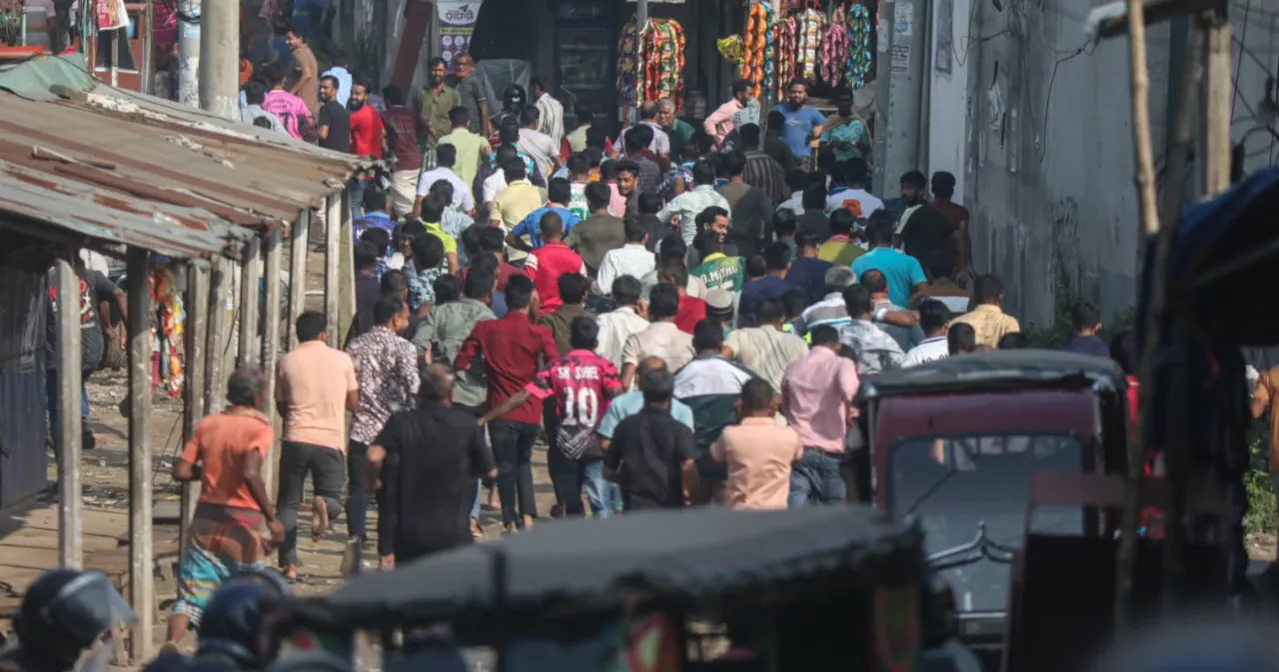
They blocked Dhaka-Tangail highway in Naojor area of Gazipur and several other places, demanding an increase in the minimum monthly wage to Tk 30,000.
The protests disrupted traffic movement in different areas of Gazipur, causing inconvenience to commuters.
Police fired sound grenades and tear gas to disperse the protesting workers, said witnesses.
Additional police personnel have been deployed to maintain law and order.
Meanwhile, 18 platoons of Border Guard of Bangladesh (BGB) personnel have been deployed in Savar and Ashulia of Dhaka, 18 in Gazipur, six in Narayanganj yo maintain law and order.
The government formed the six-member wage board on November 1 to review the minimum wage structure for garment workers amid protests across industrial areas, including Dhaka and Gazipur, demanding a minimum monthly wage of Tk 30,000.
The Minimum Wage Board fixed the monthly minimum wage for readymade garment (RMG) workers at Tk 17,000—a 36 percent or Tk 4,500 increase from the existing Tk 12,500—following a vote by board members early Wednesday after marathon negotiations failed to produce a consensus.
The new wage structure, finalised around 1:30 am at the end of the board’s fourth meeting at its Segunbagicha office, is set to take effect from December 1, subject to a government notification.
Under the finalised four-grade structure, minimum monthly pay has been set at Tk 17,000 for Grade 4 (entry-level/minimum), Tk 19,200 for Grade 3, Tk 20,000 for Grade 2, and Tk 21,500 for Grade 1, according to board members.
Deadlock Resolved by Vote
The fourth meeting began around 3:15 pm on Tuesday under the chairmanship of District and Sessions Judge Syed Azad Subhani. During protracted bargaining, factory owners raised their offer in four phases from Tk 15,700 to Tk 17,000, while workers' representatives scaled down their demand from Tk 22,000 in stages to Tk 19,000, then Tk 18,500, and finally Tk 18,000.
With both sides refusing to budge further and owners briefly lowering their offer back to Tk 16,000 Chairman Syed Azad Subhani called for a vote among the six board members after 1:00 am.
Two worker representatives voted in favor of Tk 18,000, while the remaining four members backed Tk 17,000, sealing the decision.
Industry leaders have stressed that restoring order and factory security is essential to keep production running and protect Bangladesh's standing as the world's second-largest apparel exporter.
BGMEA President Mahmud Hasan Khan warned that ongoing protests and disruptions have severely hampered production—with an average of around 70 factories shut daily since the unrest began, and peak single-day closures hitting 679 factories across major clusters, and affecting roughly 1.68 million workers (Nov. 2).
Even where factories have opened or workers have punched in, go-slows, walkouts, and clashes have disrupted output and raised costs.